Build a menu with one centre
For a four-person winter gathering, start with the mushroom–miso noodle bowl, a lightly dressed cabbage and carrot side, and an easy fruit finish. The bowl supplies warmth and substance; the salad supplies crunch and brightness. Clementines or sliced pears can close the meal without needing oven space or a complicated last-minute dessert. This is a suggested home menu, not a nutritionally complete prescription. Adjust quantities and choices to your guests, appetites and dietary requirements.
Avoid making every course a separate project. If the broth needs attention at the hob, choose a side that can wait briefly in the refrigerator. If the main dish is rich, keep accompaniments fresh rather than adding another heavy sauce. Reuse ingredients deliberately: cabbage can appear cooked in the soup and crisp in the side, while lemon can finish both. That kind of repetition makes the menu feel connected and keeps the shopping list useful.
Ask before you shop
Confirm the number of guests and ask about allergies, intolerances and dietary preferences in advance. These are not all the same, and the precautions required may differ. Check every packaged ingredient, including stock, miso, noodles and chilli condiments. A product described as vegetable stock may still need an allergen check; soba may contain wheat; a miso blend may contain fish-based dashi. Retain packaging and use clear ingredient notes rather than relying on memory once the table is busy.
If you cannot safely accommodate a serious allergy in your kitchen, say so before the gathering and agree a workable alternative. Separate utensils and labelled dishes help, but they are not a guarantee against cross-contact. Ask guests what equipment or preparation controls they need. A smaller menu that you can explain accurately is more considerate than a large set of uncertain options. Keep optional heat separate so the shared broth remains comfortable for a wider range of tastes.
Give each stage its own job
The day before: remove decisions
Choose the menu, check labels, make the shopping list and count bowls, spoons and serving utensils. Prepare broth if convenient, cool it promptly in shallow containers and refrigerate within two hours. Wash sturdy vegetables and store prepared ingredients covered in the refrigerator.
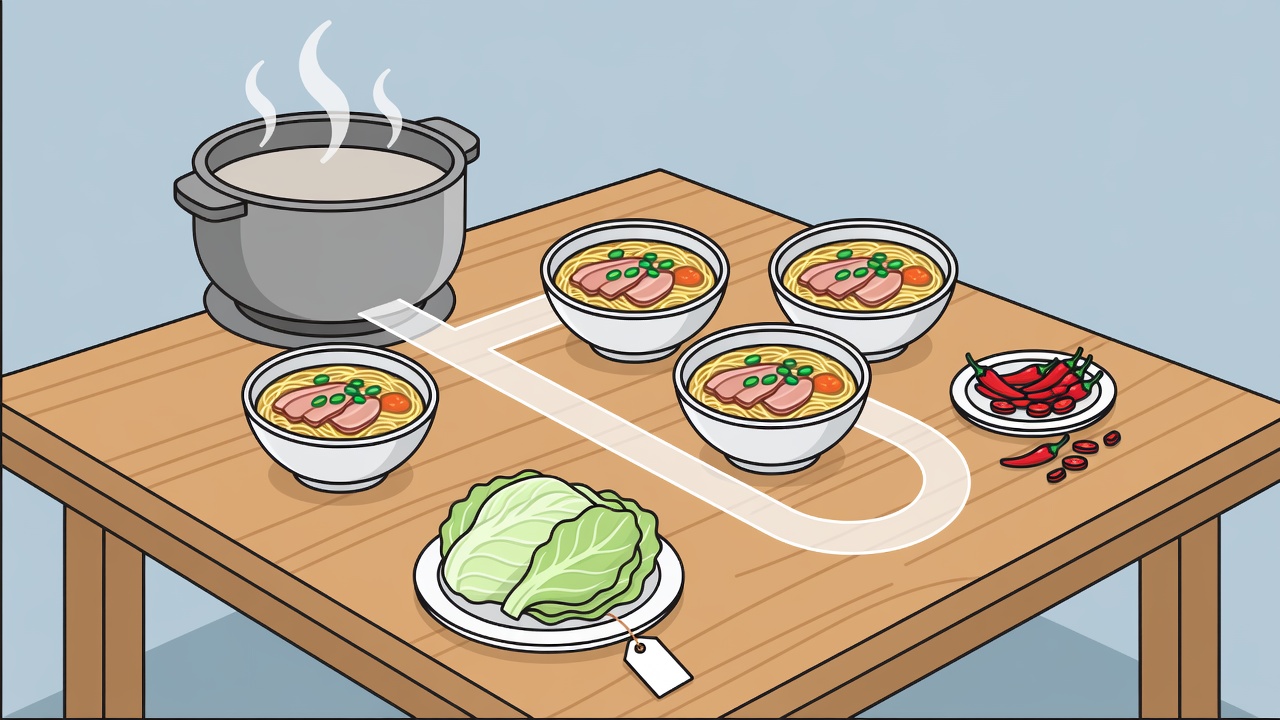
One hour before: create the serving station
Clear a stable surface near the hob. Set out bowls, a ladle, a colander and separate topping utensils. Slice vegetables, cube tofu and arrange labelled condiments. Keep prepared food refrigerated until needed.
About 35 minutes before: cook the main dish
Follow the featured recipe: brown mushrooms, add aromatics and stock, then cook carrots, cabbage and tofu in sequence. If using chilled broth, reheat it thoroughly. Bring a separate pan of water to the boil for noodles.
The final minutes: assemble, then sit down
Cook noodles to their packet instructions, drain and divide into bowls. Finish broth seasoning, ladle it over the noodles and add toppings. Serve immediately; put the chilled side on the table just before eating.
Use the timeline as an order of operations rather than an inflexible promise. Your hob, knife skills and ingredients affect the pace. Read the complete recipe before starting, and avoid making an unfamiliar dish for the first time under a strict deadline. If guests are late, keep the noodles uncooked until you are close to serving. They are usually the least forgiving part of a soup menu, while a well-managed broth can wait more successfully.
Make the table readable
Use bowls large enough to contain the broth comfortably, leaving room below the rim for carrying. Warm them with hot water if suitable for the material, then empty and dry them carefully. Group vegetables and tofu so their colours remain visible. Offer spoons and any other utensils guests prefer. A small labelled condiment area is more useful than scattering many tiny dishes along the table, especially when some toppings contain allergens or strong chilli.
Keep decorations away from the serving route, open flames and food. A cloth napkin, a clear water jug and the colours already in the vegetables can do enough festive work. Place hot pans on suitable heatproof surfaces and keep handles away from the table edge. If children are present, adults should handle the hot broth. Consider access as well as appearance: guests should not have to reach over steaming bowls to find water, cutlery or their own topping.
Finish the evening with a storage plan
Put away leftovers promptly instead of waiting until the last guest leaves. Refrigerate perishable food within two hours, or within one hour if the temperature is above 32°C. Divide large quantities into shallow containers so they cool more efficiently. Store noodles separately from broth when possible, label containers with the date and use refrigerated cooked leftovers within three to four days. Reheat leftovers to 74°C, and follow stricter guidance for particular ingredients or vulnerable diners where applicable.
Make a brief note after the meal: how much broth was used, whether the side was enough and which step felt rushed. Those observations are more useful for your next gathering than a complicated hosting template. A relaxed supper is not one where nothing needs doing. It is one where the important jobs have a sensible order, the food is safe and hot, and you have left yourself a genuine place at the table.