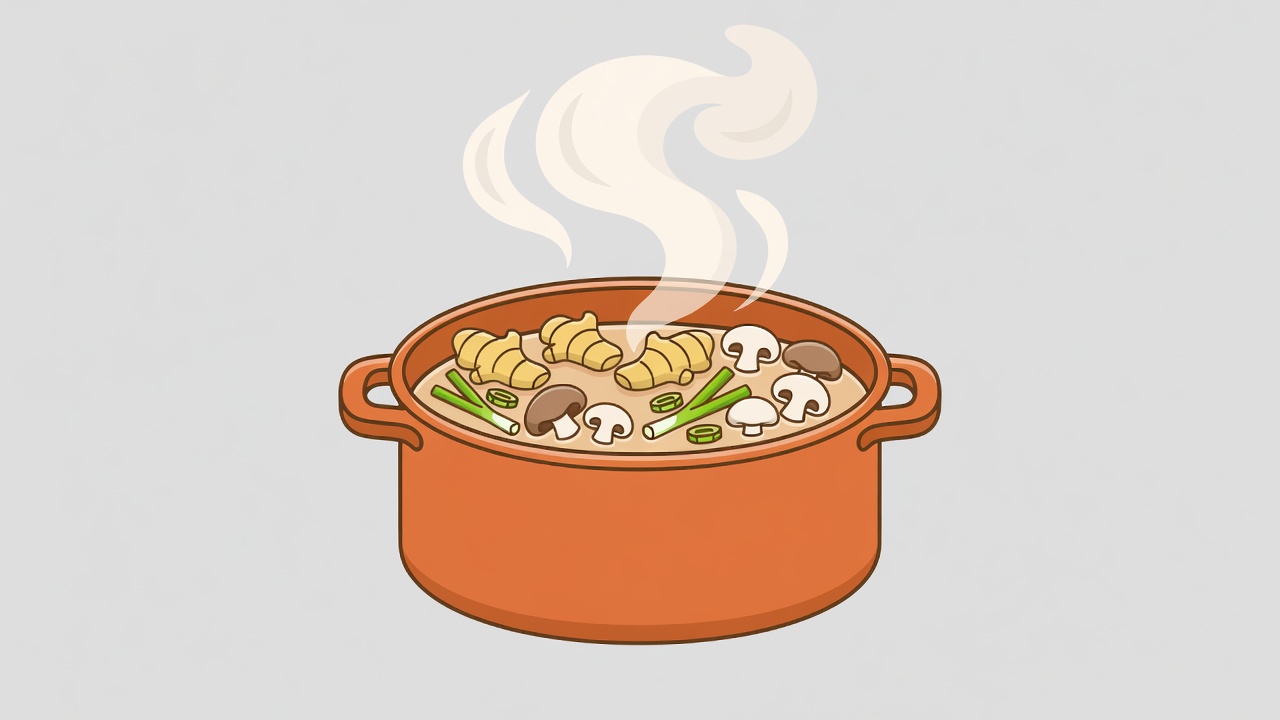
Give the broth a clear direction
Start by deciding what you want the bowl to taste like. A mushroom-led vegetable broth can be earthy and rounded; ginger can make it feel brighter; a little miso can add savoury depth. These are useful building blocks, not a requirement to include every aromatic in the cupboard. For a hosting meal, choose one main direction and carry it through the vegetables and toppings. Too many strong additions make seasoning harder to judge and shopping less manageable.
Brown sliced mushrooms in a little oil before adding liquid. Work in batches if your pan is crowded: trapped moisture encourages steaming rather than browning. Add chopped garlic and ginger near the end of this stage so they do not scorch. Pour in unsalted or lower-salt stock, then simmer gently. Taste before adding miso, soy sauce or salt. Prepared stocks vary considerably, and a salty base can become difficult to correct once noodles and toppings are ready.
The four-bowl supper formula
For four main-course bowls, gather 300 g dried noodles, 300 g mushrooms, 300 g cabbage, two carrots, 200 g firm tofu and 1.5 litres unsalted vegetable stock. You will also need one tablespoon neutral oil, 15 g grated ginger, two garlic cloves and about three tablespoons miso. Spring onions and lemon wedges make a simple finish. These quantities are a starting point for this recipe, not a universal serving rule: appetites, noodle types and side dishes all change the calculation.
- Serves
- 4
- Prep + cook
- 35 minutes
- Equipment
- 2 pans
Cooking sequence to keep beside the hob
- Brown mushrooms in the oil for 6–8 minutes. Add ginger and garlic for 1 minute.
- Add stock and thinly sliced carrots; simmer 5 minutes.
- Add shredded cabbage and cubed tofu. Simmer 3–5 minutes, until vegetables are tender and everything is hot.
- Cook noodles separately following the packet, then drain into bowls.
- Remove broth from the heat. Dissolve miso in a ladle of broth and stir back into the pan.
- Taste, ladle over noodles and finish with spring onions and lemon.
This is an adaptable home recipe inspired by miso-based soups. It is not presented as a regional ramen recipe, and changing the noodle does not automatically give it another traditional name. For a vegan version, check that the stock and miso contain no fish or other animal ingredients. Wheat noodles and many miso products contain allergens; substitutions need label checks rather than assumptions. If serving someone with a serious allergy, agree ingredients and kitchen precautions with them before cooking.
Treat noodles as their own component
Dried wheat noodles, udon, soba and rice noodles have different cooking requirements. Follow the instructions on the actual packet, then taste for the texture you want. Some noodles need boiling, some need soaking, and some fresh products only need a brief warm-through. Cooking them in a separate pan gives you control and prevents excess starch from changing the broth. Divide drained noodles between bowls shortly before serving rather than letting them sit in hot soup while guests settle.
If you are using more than one noodle for dietary reasons, use separate water, utensils and draining equipment where needed. Soba often includes wheat alongside buckwheat; rice noodles may still carry cross-contact warnings. Keep packaging until the meal is finished so you can answer ingredient questions accurately. A simple, confidently labelled menu is usually more welcoming than offering many improvised alternatives at the last moment.
Finish with contrast, not clutter
Choose one fresh element, one satisfying topping and an optional condiment. Spring onions, hot tofu and a lemon wedge are enough for the featured bowl. A crisp cabbage side can supply contrast without crowding the soup itself. Put chilli oil in a separate labelled dish, and check its ingredients: some contain sesame, peanuts, soy or seafood. Taste a spoonful of broth together with a noodle and a vegetable before deciding whether the whole bowl needs more seasoning.
Make the safe work happen early
Broth can be made ahead, but cooling and storage matter more than convenience. Divide cooked broth into shallow containers and refrigerate within two hours. Keep the refrigerator at 4°C or below, follow ingredient-specific guidance and use refrigerated leftovers within three to four days, or freeze them sooner. Reheat leftovers to 74°C and avoid repeatedly warming the same batch. Cook fresh noodles for serving when possible: they retain their texture better and make the final assembly easier to control.
For food-safety guidance, consult FoodSafety.gov storage charts. This recipe is general cooking information, not individual dietary or medical advice.