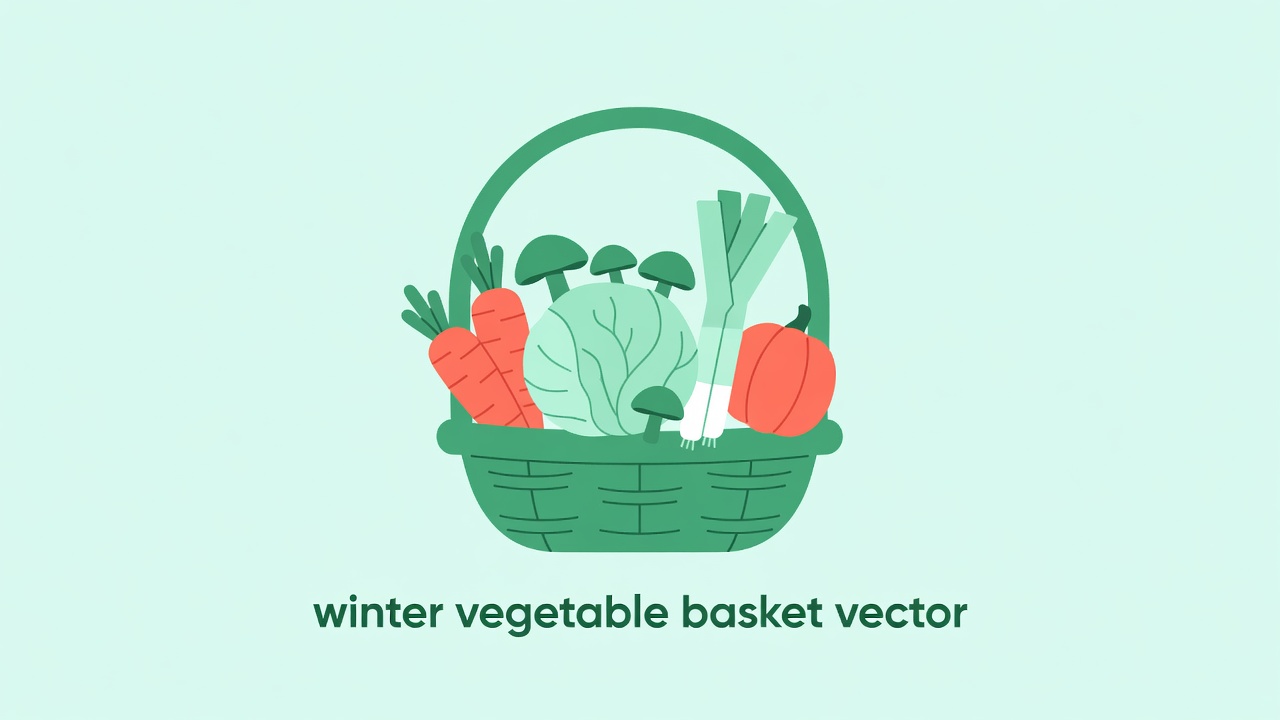
Shop for three useful roles
Think of vegetables in terms of what they contribute to the meal. Carrots and squash bring sweetness and body. Cabbage, kale and other sturdy leaves provide freshness and a little chew. Mushrooms and leeks add savoury depth when cooked carefully. You do not need every category in every bowl, but choosing two or three different roles is a reliable way to avoid a supper that feels uniformly soft, sweet or heavy.
Seasonality depends on where you live, the climate and local growing practices. A winter basket in northern Europe will not match one in every part of Australia or the United States. Stored squash, carrots and cabbage may still be useful winter purchases even when they were harvested earlier. Check local markets and shop labels rather than treating a universal calendar as a guarantee. Frozen vegetables are also practical, especially when fresh choices are limited or you need to reduce waste.
Cut to suit the cooking time
The size of a vegetable matters as much as its name. A thick carrot chunk needs much longer in broth than a thin half-moon. Slice dense roots finely for a quick soup, or roast larger pieces separately and add them as a topping. Shred cabbage into manageable ribbons so it sits comfortably with the noodles. Cut leafy stems small and add them before the leaves. This creates a useful order of preparation without requiring several extra pans.
A practical cooking-order guide
| Vegetable | Preparation | Where it fits |
|---|---|---|
| Mushrooms | Slice or tear | Brown before adding stock |
| Carrots | Thin half-moons | Early in the simmer |
| Cabbage | Fine ribbons | Later in the simmer |
| Leafy greens | Stems and leaves separated | Stems first; leaves near the end |
| Roasted squash | Even cubes | Cook separately; add hot at serving |
Use the oven for a different texture
Roasting lets vegetables develop browned edges without making the broth cloudy or sweetening the entire pot. For four people, toss about 600 g cubed squash with one tablespoon oil and spread it on a roomy tray. Roast at 220°C, or 200°C fan, for roughly 25–30 minutes, turning once and checking until tender. The time depends on cube size and your oven. Keep pieces in a single layer; a crowded tray tends to trap moisture.
Use those roasted pieces over noodles tossed with ginger and lemon, or add a few to each bowl of mushroom broth. A small amount can be enough when noodles and tofu already provide substance. Avoid burying crisp roasted edges in liquid too early. If the vegetables are ready before the guests, plan a controlled reheat rather than leaving them at room temperature all evening. The aim is a manageable sequence, not perfection at the cost of safe handling.
Keep one element fresh
A finely sliced cabbage salad gives a hot noodle supper welcome contrast. Dress it lightly with lemon juice or rice vinegar, a little oil and a pinch of salt, then taste. Add grated carrot if it is already part of your shopping basket. Make the flavour bright rather than aggressively sour: the side should refresh the palate, not overpower the broth. Dress it close to serving if you want a firmer crunch, and refrigerate prepared ingredients until needed.
Presentation works best when it follows the ingredients. A pale noodle bowl looks lively with orange carrot, dark greens and spring onion. Arrange toppings in small groups so guests can identify them, rather than scattering everything into an indistinct mix. Edible garnishes still need washing and sensible handling. Skip decorative plants unless you know they are food-safe, and avoid adding unlabelled seeds or nuts simply because they look festive.
Store for the meal you actually plan
Buy quantities that fit both the supper and a realistic leftover plan. Keep cut vegetables refrigerated in clean covered containers, wash produce under running water and keep it away from raw meat or seafood. Leeks often hold grit between their layers, so split and rinse them carefully. Inspect mushrooms and greens before cooking, discarding anything slimy or spoiled. Use frozen produce according to its packet instructions; it is not always ready to eat without cooking.
Useful leftovers can become tomorrow's lunch, but they should not become an indefinite storage project. Cool cooked vegetables promptly, refrigerate within two hours and use refrigerated cooked leftovers within three to four days, or freeze sooner. Keep raw salad and cooked toppings separate when practical. For the next supper, repeat the method with what is genuinely available: a sweet element, a green element and a savoury element. That is a more adaptable plan than chasing a fixed decorative shopping list.