Begin with the name, not the garnish
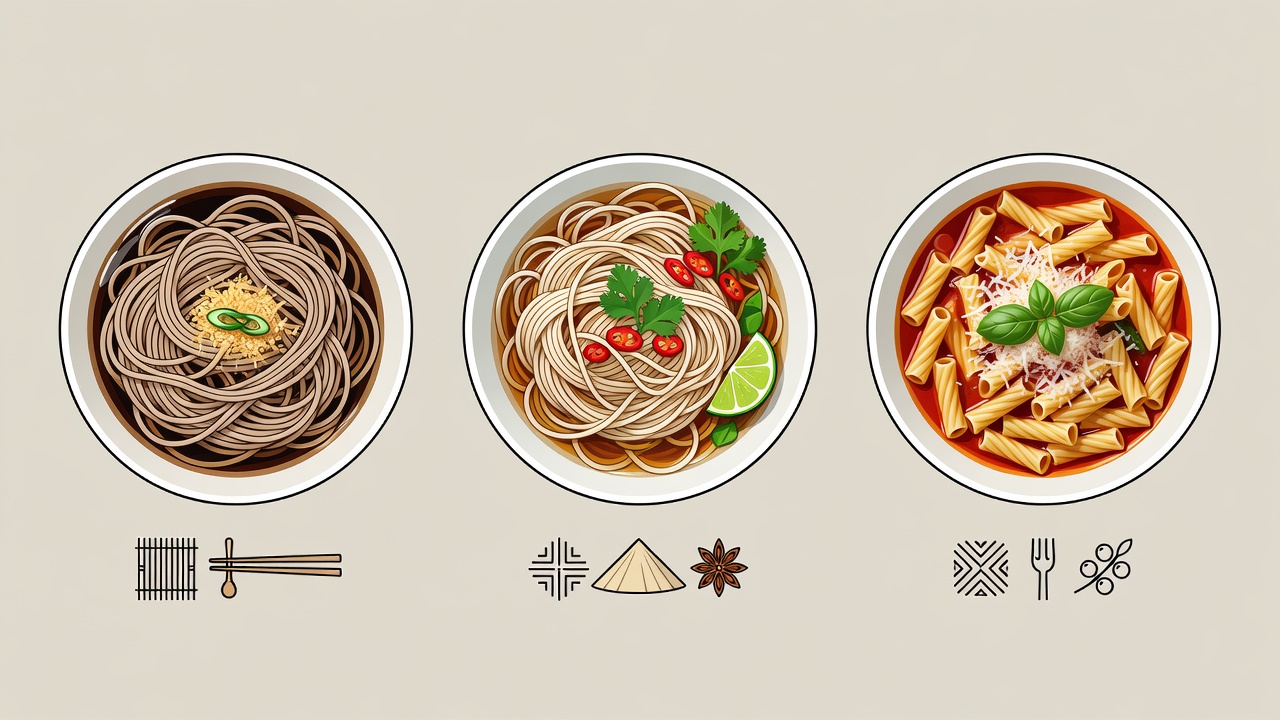
A bowl does not become ramen because it contains noodles and a soft egg, nor phở because it includes rice noodles and herbs. Dish names carry information about ingredients, techniques and communities. Learning that information helps you make better cooking decisions and describe adaptations honestly. Our mushroom–miso supper is deliberately named for its main ingredients. It draws on familiar soup-building techniques without claiming to reproduce a specific restaurant style or regional recipe.
Traditions also change within places and families. A short guide cannot establish a single authoritative version of a dish, and regional variation is often part of its identity. Use the notes below to orient your reading, then seek recipes from cooks who explain the practice in detail. Where a substitution is necessary, say what changed. Clear naming is useful to guests as well as respectful: it sets expectations about flavour, texture and ingredients before the first spoonful.
Japan: soba, udon and ramen have different identities
Soba noodles are made with buckwheat, often mixed with wheat, and may be served hot or cold. Toshikoshi soba is associated with New Year's Eve in Japan and the transition into the coming year. Explanations of its symbolism vary, including associations with longevity and leaving hardship behind. It is not a general label for every Japanese winter noodle meal. If you serve a dish inspired by this custom, learn about the occasion rather than presenting it as a Christmas tradition.
Udon are thick wheat noodles, while ramen generally uses alkaline wheat noodles with a distinctive texture. The broth, seasoning base and toppings help define a ramen bowl; miso alone is not the definition. Sapporo in Hokkaido is particularly associated with miso ramen, but that association does not make a quick vegetable-miso soup a Sapporo recipe. Kyoto, Osaka and other places have their own noodle practices and preferences. Specificity makes these differences easier to appreciate instead of flattening them into one category.
Vietnam: phở is more than an aromatic broth
Phở combines rice noodles with a carefully prepared broth and particular serving conventions, with beef and chicken versions among the best known. Hanoi and Ho Chi Minh City are useful reference points for discussing northern and southern styles, though households and businesses vary within both. Broth seasoning, sweetness, herbs and table accompaniments can differ. Avoid turning those differences into a rigid test of authenticity based on a single garnish or one restaurant experience.
For a winter host, the lesson is the relationship between broth, noodles and final assembly. That technique can inform another meal without using the dish's name. If you adapt a documented phở recipe for dietary needs, identify the recipe and state your substitutions. If you simply make ginger vegetable broth with rice noodles, that plain description is accurate and inviting. It also helps guests understand that the bowl may not have the flavour structure they expect from phở.
Korea: the appeal of knife-cut noodles
Kalguksu refers to Korean knife-cut wheat noodles commonly served in broth. Broths and additions vary, with seafood, chicken and vegetables appearing in different preparations. Its comforting quality comes partly from the relationship between the noodle texture and the soup, not from an interchangeable collection of spicy condiments. Read a detailed recipe before trying fresh dough: thickness, cutting and cooking all influence the result. For a first gathering, practise unfamiliar noodles beforehand rather than making a demanding technique the centre of your serving deadline.
Italy: a different kind of broth-centred gathering
In Italy, pasta in brodo offers another way to understand the partnership between a carefully made broth and starch. Tortellini in brodo are particularly associated with Emilia-Romagna, including Bologna and Modena, and can appear in festive family meals. Filled pasta needs its own preparation and timing; it is not simply a substitute name for any noodle soup. Ingredients may include meat, eggs, dairy and wheat, so festive associations do not remove the need for clear dietary checks.
Bring the learning back to your own table
Choose one tradition to explore carefully rather than combining several names into a novelty menu. You might learn how a broth is seasoned, why a noodle has its texture or how a dish relates to a particular occasion. Keep notes about the source recipe and your changes. A warm, precise description such as “mushroom broth with wheat noodles and winter cabbage” is often more useful than an ambitious claim of authenticity. Hospitality does not require borrowing a prestigious name.
Starting points for further reading
Explore regional food information through Japan's Ministry of Agriculture, Forestry and Fisheries, Vietnam Tourism, Visit Korea and Emilia-Romagna Tourism. These are independent external resources, not affiliations or endorsements.